

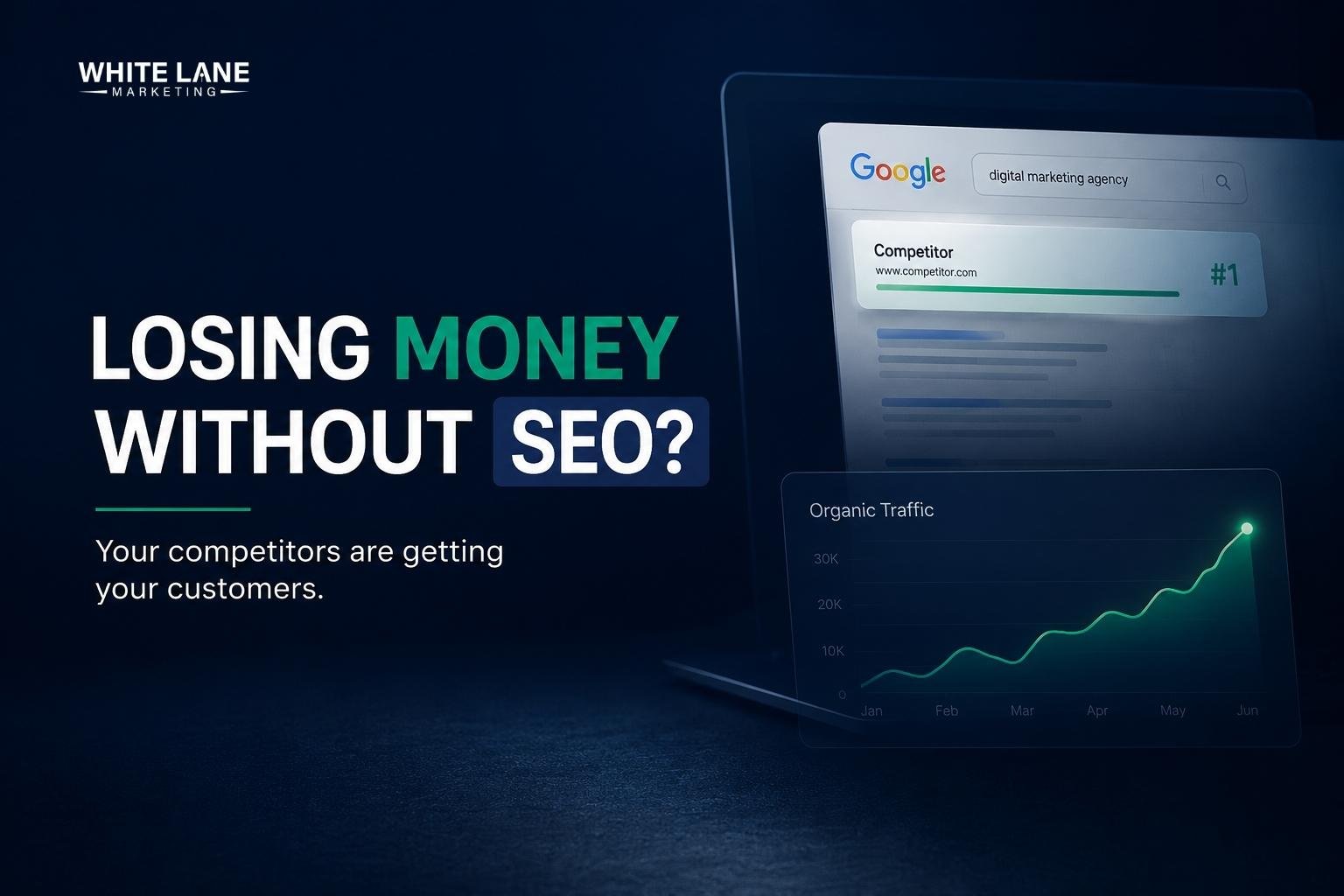
You have probably heard this line before: “You need SEO.” But nobody explains what that actually means for a business like yours, or what happens to your revenue when you skip it.
Here is the short version: every day your website fails to appear in search results, potential customers are choosing competitors they may not even prefer. They are not making a better choice. They are just making the only choice that is visible to them.
This article breaks down what SEO is in plain language, how it actually works, and what you should realistically expect from it.
What SEO Means (Without the Technical Jargon)
SEO stands for Search Engine Optimization. It is the process of improving your website so that Google shows it to people who are actively searching for your products or services.
When someone searches “digital marketing agency in Dhaka” or “how to grow my business online,” Google quickly scans millions of websites and decides which ones deserve to appear at the top. SEO is the work you do to earn one of those top spots.
It is not about tricking Google. It is about making your website genuinely useful, credible, and easy to understand for both real people and search engines.
Why Page One Is the Only Page That Matters
Research from Backlinko found that the first result on Google gets roughly 27% of all clicks. By position ten, that number drops to under 3%. Page two? Most users never go there.
This is not about vanity rankings. It is about where your potential customers are looking and whether they can find you when they do.
If your business is sitting on page two or three for your main services, you are essentially invisible to people who are already searching for exactly what you offer.
The Three Things That Actually Drive SEO Results
Most SEO guides turn this into a list of twenty things. In practice, three areas drive the majority of results for small and medium businesses.
What you publish on your website
Your content needs to clearly answer the questions your customers are searching for. This includes the words on your service pages, how your headings are structured, and whether your copy actually speaks to the problems your audience faces.
Google reads your pages like a reader would. Vague, generic content written to stuff keywords rather than help a real person will not rank.
How your website performs technically
A website that loads slowly, breaks on mobile, or has messy code will struggle to rank regardless of how good the content is. We have audited websites where fixing basic technical issues, such as improving page speed and correcting indexing errors, led to noticeable traffic improvements within just a few weeks.
Page speed, mobile responsiveness, clean URL structures, and proper indexing all fall into this category. These are often straightforward fixes that produce real results once addressed.
Who links back to your website
Backlinks are links from other websites pointing to yours. Google treats them as endorsements. The more credible websites that reference your content, the more Google trusts your site.
One strong link from a respected industry publication is worth more than fifty links from random low-quality directories. Quality beats quantity here, every time.
How Long Does It Actually Take?
Let’s be honest about this: SEO is not a fast strategy. Most businesses start noticing real momentum after three to six months of consistent work. Once rankings begin to improve, future growth becomes easier because the earlier work keeps supporting new results.
That timeline depends on how competitive your industry is, how your website currently stands, and how aggressively you pursue the work.
This is why many businesses run paid ads alongside SEO. Ads put you in front of customers immediately while SEO builds the organic foundation that keeps working long after the ad budget stops.
Signs Your Business Should Start SEO Now
You do not need a specialist to tell you whether SEO is relevant. Here are some clear signs:
- Searching your own services on Google does not bring up your website on page one
- Your website traffic has been flat or declining for months
- Most of your new clients come through referrals rather than online search
- Competitors you know are smaller than you consistently outrank you
- You recently launched a new website and barely anyone is finding it
If any of these describe your situation, the problem is not your product or service. It is visibility.
What a Real SEO Campaign Looks Like
A properly structured SEO engagement for a small business typically covers:
- A full audit of your current website, identifying technical issues and content gaps
- Keyword research based on actual search volume and what your ideal clients are searching
- On-page optimization of existing pages and creation of new content targeting specific searches
- Technical fixes covering speed, mobile performance, and proper crawlability
- A backlink building strategy that earns links from relevant, trusted sources
- Monthly reporting that shows rankings, traffic changes, and progress
Many small businesses lose potential leads simply because their pages are not indexed properly or their key service pages have never been optimized for the searches that matter. These are fixable problems, but only once they are identified.
One Thing Most Business Owners Get Wrong About SEO
The most common mistake is treating SEO like a checkbox. Business owners hire someone for three months, see partial results, and stop because it did not work fast enough.
SEO done correctly is a long-term channel. The businesses that see the best results are the ones that treat it as an ongoing investment rather than a one-off project.
The upside is real: once rankings are established, they tend to hold. Unlike paid ads that stop working the moment your budget does, organic search traffic continues coming in as long as the work is maintained.
Frequently Asked Questions About SEO
Is SEO worth it for small businesses?
Yes, particularly for businesses that rely on local customers or serve a defined market. SEO connects you with people who are actively searching for what you offer, which means the traffic it brings tends to convert better than most other channels.
How much does SEO cost?
It varies significantly based on how competitive your industry is and what your website currently needs. A basic local SEO engagement typically starts from a few hundred dollars per month. More competitive niches with national or international targets require a larger investment. The right way to think about it is cost relative to the value of a new customer, not as a fixed expense.
Can I do SEO myself?
Some of it, yes. Basic on-page optimization, writing quality content, and improving your Google Business Profile are all things a motivated business owner can handle. The technical side and link building tend to require more experience and tools to do properly. Most businesses benefit from professional help at least for the strategy and initial setup.
How long does SEO take to show results?
For most businesses, meaningful improvements in rankings and traffic begin appearing within three to six months of consistent work. Reaching and holding top positions in competitive niches can take longer. The earlier you start, the earlier you benefit.
The Bottom Line
SEO is how people find your business online without you paying for every single click. It builds trust, drives consistent traffic, and delivers a return that grows over time rather than disappearing when the budget runs out.
If you are not sure where your website currently stands, start with a proper audit. Understanding the gaps is the first step to fixing them.
White Lane Marketing offers a free SEO audit with no commitment. We will look at your site, identify what is holding your rankings back, and give you a clear picture of what needs to happen next.

